
Curcuma longa: The Source of Turmesac®
Turmesac® begins with the rhizome of Curcuma longa L., the botanical species commonly known as turmeric. It is a synergistic phytochemical composition derived from turmeric rhizome, designed to retain a broader spectrum of naturally occurring compounds than a single isolated molecule.
The turmeric plant
Curcuma longa is an aromatic, herbaceous perennial belonging to the Zingiberaceae, or ginger, family. It is a short-stemmed plant that can grow to approximately 100 cm in height. The plant produces oblong green leaves and funnel-shaped yellow flowers above ground, while its most valuable botanical structure develops below the soil.
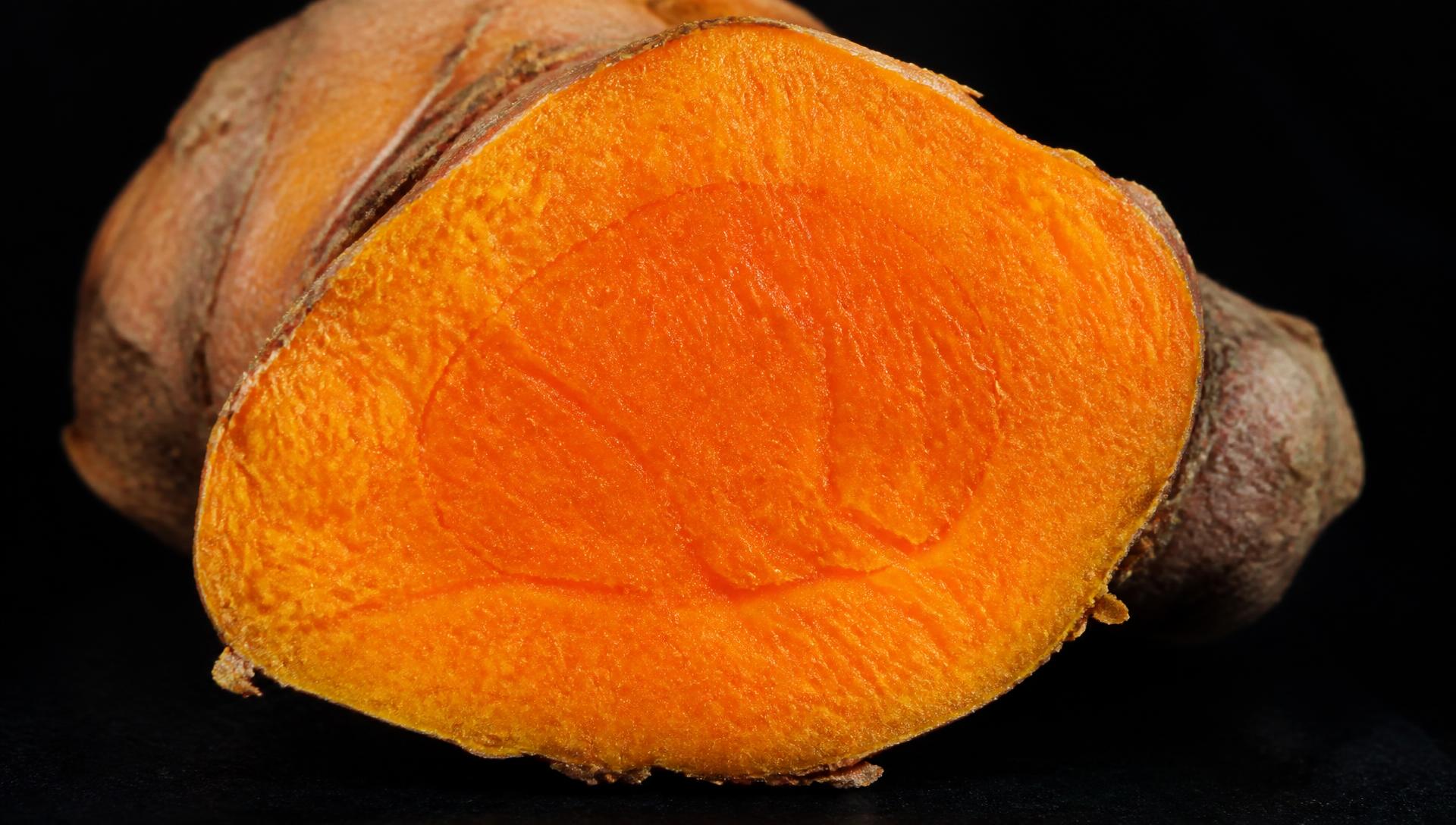
The underground rhizomes may be oblong, ovate, cylindrical or pear-shaped, often with several short lateral branches. When cut, the rhizome reveals the characteristic yellow to orange interior associated with turmeric. After harvesting, turmeric rhizomes may be cleaned, dried and powdered for use in food, traditional preparations and botanical extracts.
Turmeric has a documented history of use in India and other parts of Asia extending back thousands of years. It has traditionally been used as a culinary spice, colouring material and botanical ingredient. Its bright yellow colour has also led to the common name “Indian saffron.”
The part used
Turmesac® is produced from the rhizome of Curcuma longa. Although the rhizome is sometimes referred to informally as a root, it is botanically an underground stem that stores nutrients and supports the development of new shoots.
The turmeric rhizome contains several classes of naturally occurring phytochemicals, including curcuminoids such as curcumin, demethoxycurcumin and bisdemethoxycurcumin, together with volatile oils including alpha-turmerone and beta-turmerone. The rhizome also contains polysaccharides and other naturally occurring constituents that contribute to turmeric’s full phytochemical profile.
Turmesac® is composed of 95% spray-dried aqueous turmeric rhizome extract, 3% ethanolic curcuminoid extract and 2% turmeric oil. This composition brings together the water-dispersible and oil-associated fractions of the turmeric rhizome rather than relying exclusively on isolated curcumin.
Native habitat and cultivation
Curcuma longa is associated with India, Southeast Asia and Indonesia and is now cultivated across tropical and subtropical regions. Turmeric is cultivated in India, Bangladesh, China, South America and other suitable growing regions. India is identified as the world’s largest supplier of turmeric.
Turmesac® research has evaluated authenticated turmeric rhizomes from established Indian turmeric-growing regions. One study used the Salem variety collected from Salem, Tamil Nadu, in November 2018. Another used Sangli turmeric collected from Maharashtra in March 2019. In both cases, the botanical material was identified or authenticated by a taxonomist or botanist from the Star Hi Herbs research and development division before processing.
The rhizomes were carefully cleaned, dried and powdered before extraction. In the aqueous extraction study, powdered turmeric was extracted with distilled water at 100°C, filtered, concentrated and spray-dried to produce the powdered extract used for biological evaluation.
Taxonomy
| Classification | Botanical information |
|---|---|
| Kingdom | Plantae |
| Family | Zingiberaceae |
| Genus | Curcuma |
| Species | Curcuma longa L. |
| Common names | Turmeric, Indian saffron |
| Plant part used | Rhizome |
| Principal phytochemicals | Curcuminoids, turmeric polysaccharides and volatile oils |
Discuss botanical provenance and supply with our team
Documentation on authentication, collection regions and extraction is available on request for qualified partners.